
For calm listening needs
$1,400 to $1,900 a pair
Suits Quiet rooms and one-to-one chats
Supports people who spend most of their time in quiet, predictable places.
Independent audiology across Melbourne & Geelong
Hearing aids from all major brands
If you're thinking about hearing aids, it's fine to feel unsure. We'll explain styles, features and prices clearly. You can try a pair with our free 30-day home trial.
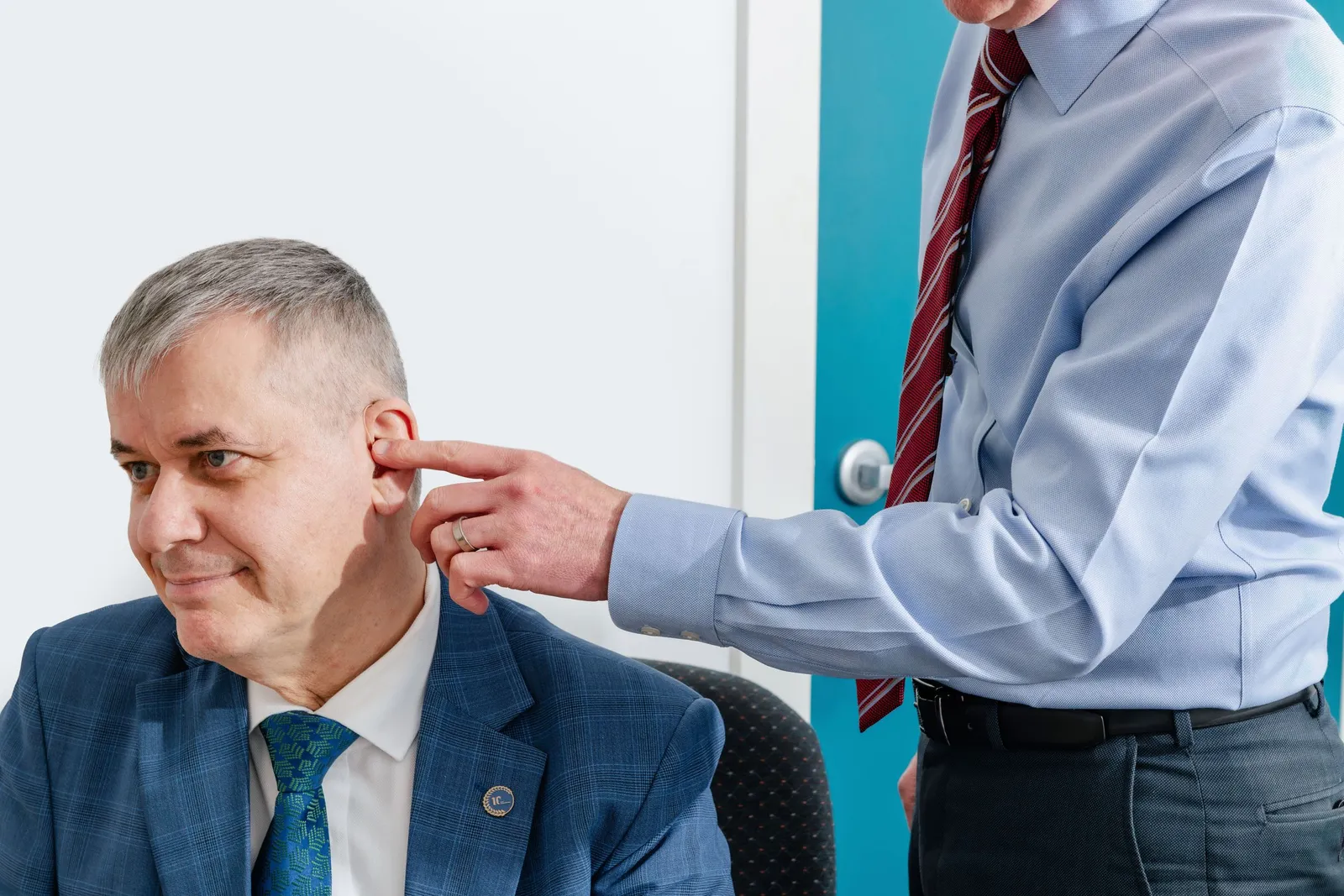
Try before you buy
Free 30-day trial
Brands
All major brands
Follow-up visits
Free of charge
Our staff
Earn no commission
Choosing hearing aids
You may be worried about the cost, or about being talked into something. That's understandable, and there's no rush.
Apex Hearing is owned by two local audiologists, Julian and Orlando. We have no ties to any hearing aid maker, and no one here is paid commission.
So our advice is about your hearing, your day and your budget. If a simpler hearing aid would suit you, we'll say so.
Hearing aids may help, though results vary from person to person. If you have sudden hearing loss, ear pain, fluid from your ear or sudden dizziness, see your GP or go to an emergency department today.
We'll give you independent advice and as much time as you need.
Sizes and styles
Hearing aids are much smaller than they used to be. Most sit behind the ear, and some sit inside it. We're happy to show you each style.
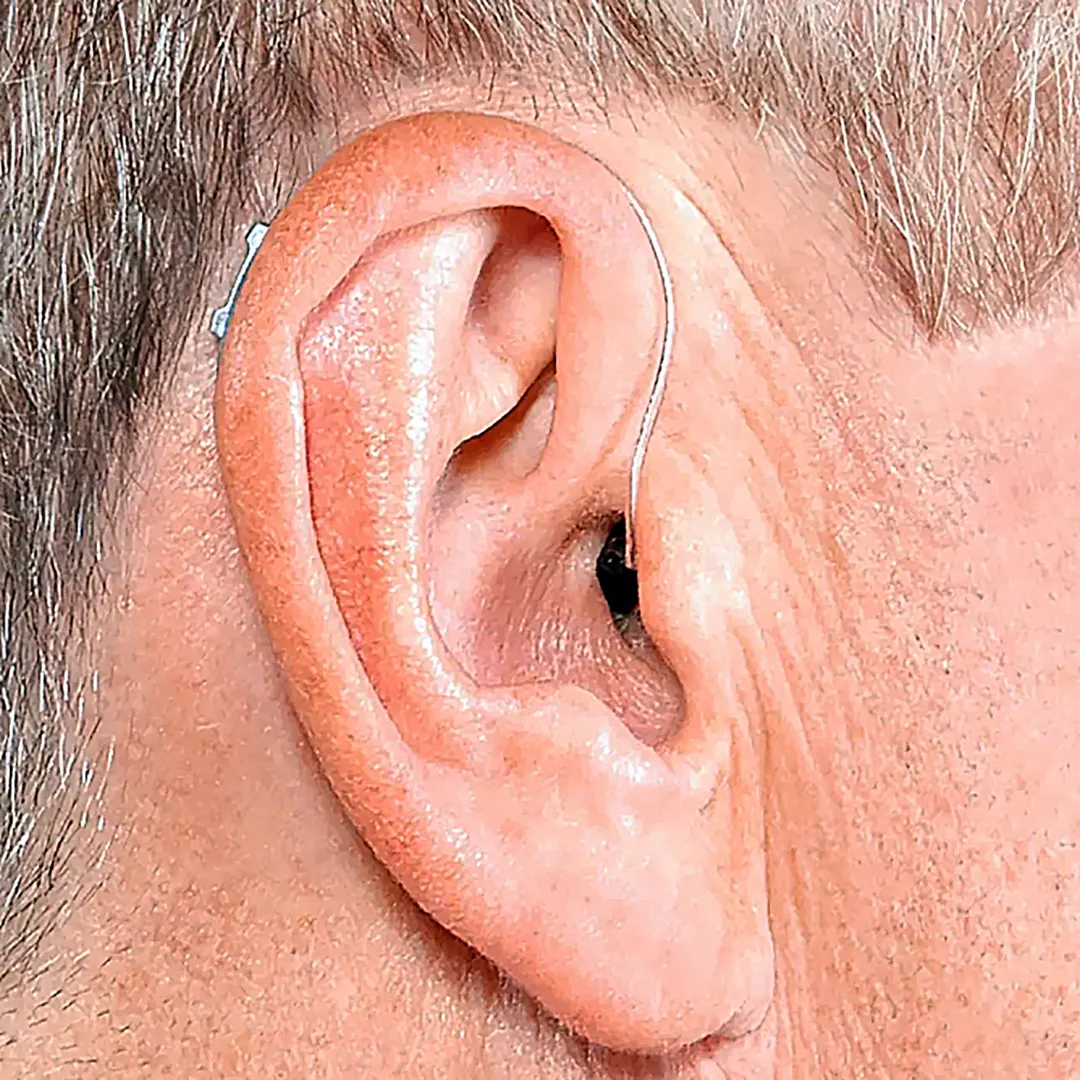
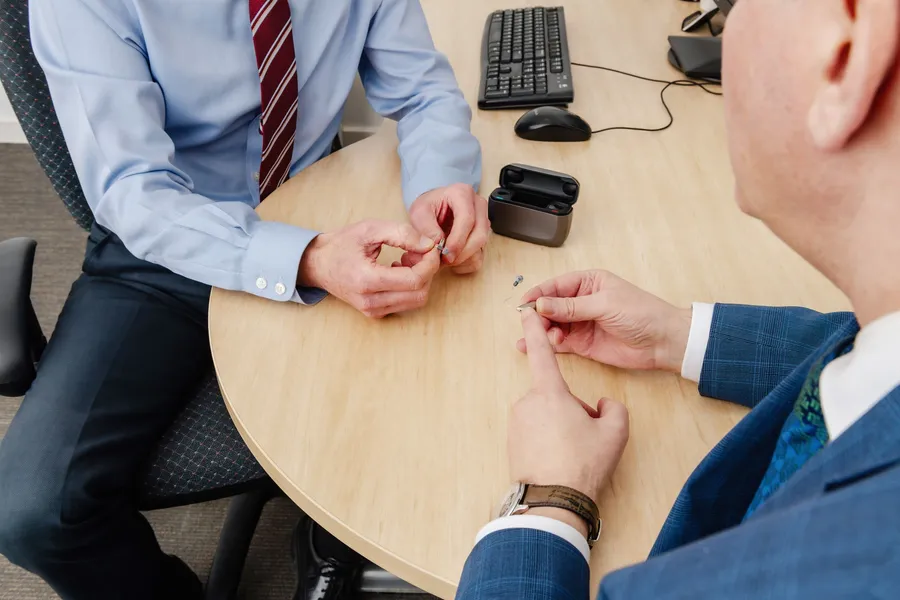
A small piece sits behind your ear. A thin wire carries sound into your ear.
Suits: Mild through to severe hearing loss
Everything sits in one piece behind your ear. Bigger buttons make it simpler to handle.
Suits: Greater hearing loss, or easier handling
Made to fit your ear from a mould we take. Nothing sits behind your ear.
Suits: Mild to severe hearing loss, wearing glasses
The smallest style sits deep in your ear canal, where it's very hard to see.
Suits: Mild hearing loss, and steady hands
Hearing aid brands
We can pick from any brand sold in Australia, and suggest the one that suits you.
 Phonak
 Oticon
 Signia
 Starkey
 Widex
 ReSound
 Unitron
 Bernafon
What it costs
Hearing aids are $1,400 to $11,500 a pair. In quiet places, most hearing aids behave much the same. Higher levels help more in noisy places, like restaurants.
$1,400 to $1,900 a pair
Suits Quiet rooms and one-to-one chats
Supports people who spend most of their time in quiet, predictable places.
$1,900 to $2,900 a pair
Suits Small groups and quieter cafes
Helps with small gatherings and places where background noise is present but manageable.
$3,400 to $4,500 a pair
Suits Restaurants, outings and family meals
Suits people who move between quiet and moderately noisy places throughout the day.
$5,500 to $7,500 a pair
Suits Busy venues, meetings and outdoors
Designed for people who often have meetings, outdoor activities and several people talking.
$9,500 to $11,500 a pair
Suits The busiest, most complex places
Supports people who are often in crowded venues and fast-changing places, with many voices at once.
If you hold a Pensioner Concession Card, or a Veteran Gold or White Card, you may get hearing aids at no cost. Conditions apply. We're happy to check for you.
See prices and rebatesThe 30-day home trial
There's no pressure to decide on the day.
Your first visit takes 30 to 40 minutes. We check your hearing and explain what we find.
Where do you find it hardest to hear? Your answers help us suggest a level of technology.
The fitting takes about 30 minutes. We set them up and show you how to use them. Real Ear Measurement uses a small microphone in the ear canal to measure how your hearing aids perform, so we can fine-tune them accurately for your hearing needs.
Take them home for 30 days. Wear them in your normal week, especially where hearing is hardest.
We'll see you one to two weeks later, for about 20 minutes. Adjustments are common early on.
If they suit you, you keep them. If not, you simply return them.
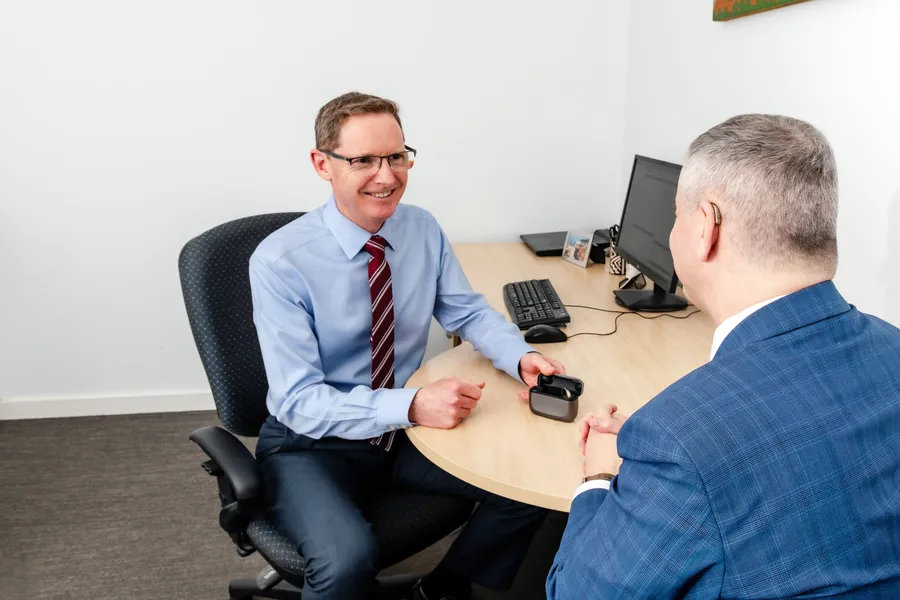
Hearing aid questions
Hearing aids cost $1,400 to $11,500 a pair, across five levels of technology. Together, we'll work out which level suits your life and budget.
Yes. Every pair comes with a free 30-day home trial. After the trial, the choice is entirely yours.
Usually not. Most hearing aids today are small and light. Some in-the-ear styles are hard to spot, and behind-the-ear styles are slimmer than before.
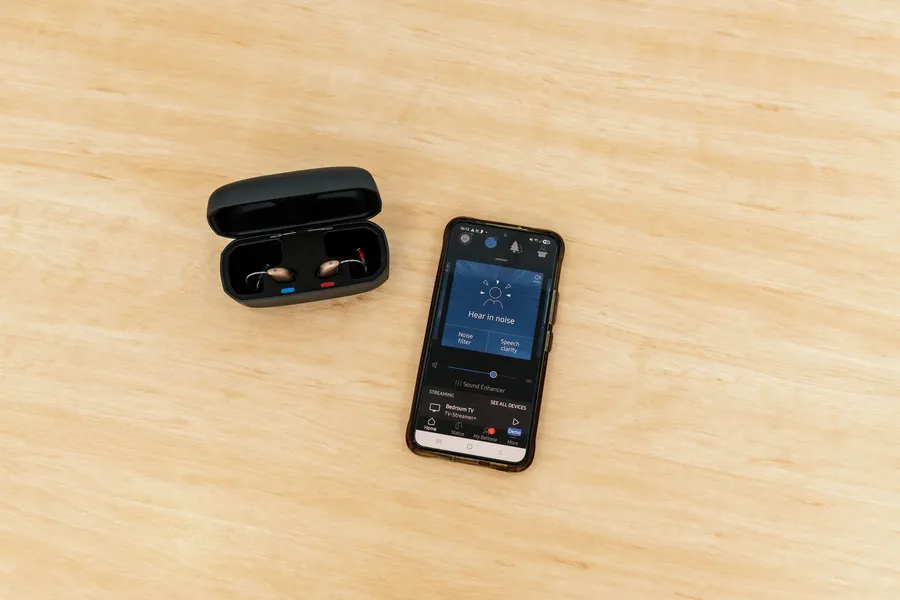
Many people find them easier. They charge in a case overnight, so there are no small batteries to change. They turn on by themselves.
They connect to most modern phones and tablets, so phone calls and music stream straight to your ears. Many also connect to your TV.
You may be able to. Pensioner and veteran card holders may qualify for the Hearing Services Program. WorkCover and health funds may also help.
You're welcome to ask anything, with no pressure to buy. Book a time, or give us a call first.




Julian, Orlando, Eva and Sara look forward to hearing from you.
Live chat isn't available right now
Please call us on 03 9521 6118 or book online .